

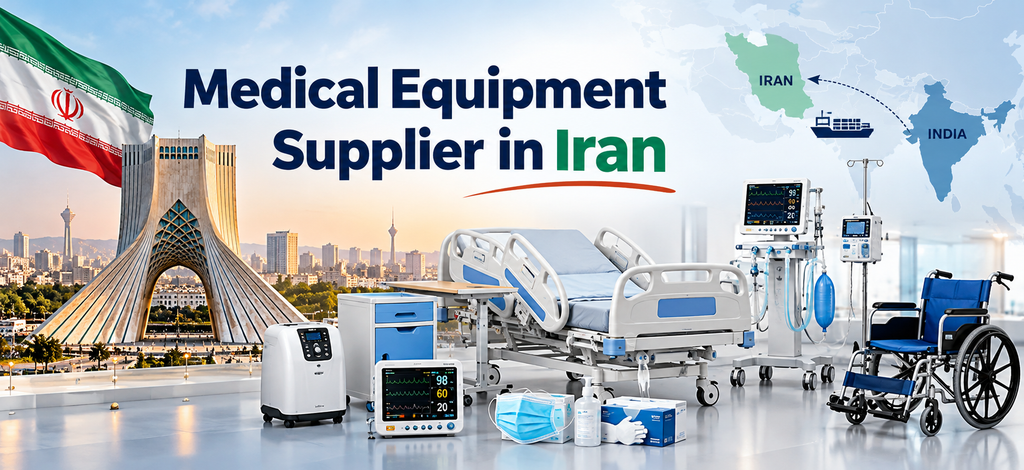
Medical Equipment Supplier in Iran: How to Import Hospital Equipment and Bulk Medical Supplies from NIMAMEDS
Healthcare providers need dependable medical equipment, hospital furniture, diagnostic devices, and essential medical supplies to support patient care and daily operations. For hospitals, clinics, healthcare distributors, and procurement companies in Iran, sourcing the right products at competitive prices requires careful supplier evaluation, technical verification, and import planning.
NIMAMEDS is an India-based medical equipment and healthcare products supplier offering a range of diagnostic devices, hospital-care products, mobility aids, and medical supplies. Iranian healthcare buyers exploring international sourcing can contact NIMAMEDS to discuss product specifications, bulk purchasing requirements, quotations, and potential export arrangements.
If you are searching for a medical equipment supplier in Iran, comparing a medical equipment manufacturer in India, or evaluating a medical supplies exporter to Iran, this guide explains how to plan your sourcing process and request a quotation for your healthcare business.
Why Source Medical Equipment from India?
India is an established source of medical devices, hospital supplies, healthcare products, and medical manufacturing capabilities. For international buyers, working with an Indian supplier can provide another sourcing option when comparing product specifications, purchasing requirements, and commercial terms.
Hospitals, clinics, importers, and distributors considering a medical equipment manufacturer in India should evaluate the following factors before selecting a supplier.
- Product range: Check whether the supplier can meet your requirements for hospital beds, diagnostic equipment, patient-care products, and medical consumables.
- Product specifications: Request detailed technical information, product dimensions, intended use, accessories, and operating requirements.
- Quality documentation: Verify applicable certificates, manufacturer details, and supporting technical documents for the specific products.
- Bulk purchasing: Confirm minimum order quantities, availability, packaging, and the supplier’s ability to fulfil the requested order.
- Transparent quotations: Request itemized prices, quotation validity, payment terms, and proposed shipping arrangements.
- Export feasibility: Confirm that the proposed products, counterparties, payment methods, and shipping arrangements can legally be used for the intended Iranian destination.
Choosing a supplier based on these criteria helps procurement teams compare more than the initial purchase price.
What Hospital Equipment Can Iranian Buyers Source?
NIMAMEDS offers several categories of medical equipment and healthcare products through its www.nimameds.com/. Buyers can explore the product portfolio and contact the sales team to confirm availability for their specific requirements.
1. Hospital Beds and Hospital Furniture
Hospital beds are essential for inpatient wards, recovery areas, nursing facilities, and other patient-care environments. Buyers should choose bed configurations according to their clinical requirements, available space, patient needs, and operational procedures.
Relevant purchasing categories may include:
- Manual hospital beds
- Semi-electric and electric hospital beds, subject to availability
- Patient beds and bedside lockers
- Hospital mattresses and selected patient-care accessories
- Patient stretchers and transfer equipment, where available
- Selected hospital furniture and nursing-care products
For hospitals and distributors placing bulk orders, a reliable ICU beds and hospital furniture supplier should provide clear information about bed dimensions, adjustment mechanisms, safe working loads, side rails, castors, mattress compatibility, and cleaning requirements.
Buyer tip: Request the exact product specifications and available configurations before comparing quotations. Two hospital beds may have different adjustment functions, accessories, and load capacities even when their product descriptions appear similar.
2. ICU Beds and Critical-Care Equipment
Intensive care units require equipment selected for the intended clinical environment and the hospital’s technical requirements. Depending on the procurement project, buyers may need specialized beds, patient-monitoring equipment, infusion systems, suction equipment, or respiratory-care products.
When evaluating ICU beds and hospital furniture suppliers, check:
- Required bed functions and positioning options
- Safe working load and patient accessibility
- Side rails, locking systems, and emergency-positioning features where applicable
- Compatibility with mattresses and other accessories
- Electrical requirements for powered equipment
- Technical documentation, maintenance needs, and applicable certifications
For critical-care devices, confirm the intended clinical use, product configuration, documentation, and regulatory eligibility before placing an order.
NIMAMEDS lists selected hospital-care and medical equipment products on its website. Buyers should contact the sales team to confirm the availability and suitability of specific ICU products and configurations.
3. Diagnostic and Patient-Monitoring Equipment
Diagnostic equipment helps healthcare professionals assess and monitor patient health. NIMAMEDS lists products such as blood pressure monitors, thermometers, pulse oximeters, glucometers, and other monitoring or diagnostic devices.
These products may be relevant to clinics, hospitals, diagnostic centres, medical retailers, and healthcare distributors.
Before purchasing, evaluate:
- Measurement capabilities and intended use
- Accuracy specifications and applicable performance documentation
- Power requirements and operating conditions
- Consumables, accessories, and maintenance requirements
- Packaging, product labeling, and user manuals
- Applicable regulatory and registration requirements
For bulk purchases, prepare a product list with quantities and specifications so the supplier can respond with a more accurate quotation.
4. Respiratory-Care and Patient-Care Equipment
Respiratory-care and patient-support products are used across selected hospital, clinical, and home-care environments. The NIMAMEDS website lists products such as CPAP machines, oxygen concentrators, suction equipment, and other patient-care items.
Buyers should specify the intended use, required configuration, accessories, power requirements, and documentation needed for their facility.
The availability of each product for export to Iran must be confirmed individually. Specialized medical devices may have additional regulatory, technical, and import requirements.
5. Mobility Aids and Rehabilitation Products
Mobility products can support patient movement, rehabilitation, and everyday care. Relevant product categories include wheelchairs, walkers, walking sticks, and commode chairs.
Hospitals, rehabilitation centres, care facilities, and medical distributors should compare product dimensions, weight capacity, materials, portability, ease of cleaning, and intended applications.
For distributors, purchasing several product types through a planned bulk order can help align stock with customer demand. Confirm the available models, packaging quantities, and commercial terms before finalizing the purchase.
6. Bulk Medical Supplies and Protective Products
Medical supplies are essential for healthcare facilities, medical retailers, and institutional procurement teams. NIMAMEDS lists product categories including masks, gloves, sanitizers, protective wear, and other healthcare supplies.
Before requesting a quotation, identify the required material, size, product standard, packaging quantity, shelf-life requirements where relevant, and intended application.
For larger orders, ask the supplier to specify the quantity per carton, total shipment volume, product documentation, and any applicable storage or transport conditions.
How to Import Hospital Equipment and Bulk Medical Supplies from India to Iran
Importing medical equipment involves commercial, regulatory, financial, and logistics considerations. The following process can help Iranian buyers organize their requirements before approaching a medical supplies exporter to Iran.
Step 1: Prepare Your Medical Equipment Requirement List
Start by creating a list of the products you need. Include the product category, quantity, technical specifications, preferred configuration, and intended application.
For example, a hospital procurement project might include:
| Product category | Information to provide |
|---|---|
| Hospital beds | Bed type, functions, quantity, safe working load |
| ICU equipment | Intended use, configuration, accessories |
| Diagnostic devices | Device type, specifications, quantity |
| Patient-care products | Product type, dimensions, intended application |
| Medical consumables | Material, size, packaging, quantity |
| Hospital furniture | Dimensions, materials, design requirements |
A detailed requirement list allows the supplier to assess the inquiry and prepare a more relevant response.
Step 2: Contact NIMAMEDS for a Product Quotation
Once your product requirements are ready, contact NIMAMEDS with the requested products and quantities.
For a medical equipment quotation for Iran, ask for:
- Product names and model details
- Available configurations and technical specifications
- Unit prices and total order value
- Minimum order quantities
- Packaging and shipment information
- Quotation validity and proposed payment terms
- Available certificates and technical documentation
- Estimated preparation and dispatch timelines, if the order is feasible
A detailed quotation helps your procurement team compare products and determine whether the proposed purchase meets the project’s budget and requirements.
Request a quotation: Email your product list to sales@nimameds.com or visit https://nimameds.com/ to explore the available catalogue.
Step 3: Verify Iranian Import and Medical-Device Requirements
Before committing to an order, work with an appropriately authorized Iranian importer or regulatory specialist to establish the requirements for each product.
Depending on the equipment, these may include medical-device registration, import authorization, manufacturer documentation, product labeling, customs documents, and other approvals.
Do not assume that a product can be imported solely because it is available from an overseas supplier. Verify the applicable requirements with the relevant Iranian authorities before payment or shipment.
Step 4: Check Payment and Shipping Feasibility
International orders involving Iran require particular care when arranging payment, transportation, and commercial documentation.
Before proceeding, the buyer and supplier should independently verify:
- Whether the products and transaction are permitted under applicable trade restrictions
- Whether the buyer, supplier, financial institutions, and other counterparties can participate lawfully
- Whether a permissible payment method is available
- Whether a compliant shipping route and carrier can be arranged
- Which export, customs, and import documents are required
- Whether insurance and other shipment services can be obtained
Payment and delivery arrangements should never be assumed until they have been confirmed for the specific transaction.
Step 5: Review the Final Order Documents
Before authorizing dispatch, compare the final order documents against the approved product list and quotation.
Check the quantities, product models, packaging, unit prices, payment terms, shipment terms, and required documentation.
For specialized equipment, confirm whether installation instructions, user manuals, accessories, and maintenance information are included where applicable.
Step 6: Coordinate Customs Clearance and Delivery
The authorized importer should coordinate the required import approvals, customs procedures, and local delivery arrangements.
Responsibilities should be clearly established between the buyer, supplier, freight provider, and any authorized local representative. Delivery timelines should only be agreed upon after regulatory clearance and shipping feasibility have been assessed.
This step is especially important for bulk medical supplies, high-value hospital beds, and specialized medical devices.
How to Choose a Medical Equipment Distributor in Iran

Hospitals are not the only buyers seeking international medical equipment. Local distributors and importers may also be interested in establishing supplier relationships for regular procurement.
A medical equipment distributor in Iran evaluating an overseas supplier should consider the following.
1. Product-market fit: Identify which hospital beds, diagnostic devices, mobility aids, and medical supplies are relevant to your customer base.
2. Commercial terms: Compare pricing, minimum order quantities, payment terms, and quotation validity.
3. Product documentation: Confirm the documents available for each item and the requirements for registration or import.
4. Supply planning: Ask about product availability, production or preparation timelines, packaging, and repeat-order requirements.
5. Regulatory responsibilities: Establish who is responsible for local registration, import authorization, distribution, and any required after-sales obligations.
6. Communication: Work with a supplier that responds clearly to technical and commercial inquiries.
A distributor partnership should be based on a realistic product range, verified regulatory eligibility, transparent commercial terms, and a clear understanding of each party’s responsibilities.
Why Contact NIMAMEDS for Medical Equipment Sourcing?
NIMAMEDS provides medical equipment, diagnostic products, mobility aids, hospital-care items, and healthcare supplies through its online product portfolio.
For Iranian hospitals, medical distributors, healthcare importers, and institutional buyers exploring international sourcing, the company can be contacted to discuss product requirements and potential supply arrangements.
Reasons to explore the NIMAMEDS catalogue include:
- A range of diagnostic and patient-monitoring products
- Hospital-care and selected patient-support equipment
- Mobility and rehabilitation product categories
- Protective and hygiene supplies
- Product information and sales assistance
- The ability to submit a product list for quotation review
Product availability, manufacturer details, export eligibility, applicable certifications, payment feasibility, and shipping arrangements must be confirmed for each inquiry.
NIMAMEDS is an India-based supplier; its suitability for a particular Iranian procurement project should be assessed according to the requested products and the legal and operational requirements of the transaction.
Request a Medical Equipment Quotation for Iran
Are you a hospital procurement manager, medical equipment distributor, clinic owner, or healthcare importer looking to source hospital equipment and bulk medical supplies?
NIMAMEDS invites interested buyers to share their requirements for an initial review of product availability and potential commercial arrangements.
To help the sales team respond efficiently, include:
- Your company or healthcare facility name
- Your location in Iran
- The required medical equipment or supplies
- Preferred models or technical specifications
- Estimated order quantities
- Your target procurement timeline
- Any required documentation or regulatory specifications
Contact NIMAMEDS
Website: https://nimameds.com/
Email: sales@nimameds.com
Phone: +91 9218191605
Call to action: Request Your Medical Equipment Quote Today
Send your product list and order quantities to NIMAMEDS to discuss available products, pricing, specifications, and potential export feasibility.
For every order, import approvals, applicable trade restrictions, payment arrangements, and shipping requirements must be verified before proceeding.
Frequently Asked Questions
1. How can I find a medical equipment supplier in Iran?
Compare local suppliers and qualified international suppliers based on product suitability, documentation, transparent pricing, and regulatory eligibility. If sourcing from India, confirm that the supplier can support the required products and that the proposed import transaction is permissible.
2. Can I import hospital beds from India to Iran?
Import feasibility depends on the particular bed, applicable medical-device requirements, trade restrictions, payment arrangements, and shipping availability. Confirm these details with the supplier and an authorized Iranian importer before placing an order.
3. Does NIMAMEDS provide bulk medical supplies?
NIMAMEDS lists multiple medical equipment and healthcare product categories. Buyers should contact the sales team with their product list and required quantities to confirm availability, minimum order quantities, pricing, and potential export arrangements.
4. How do I get a medical equipment quotation for Iran?
Email sales@nimameds.com with your company details, product requirements, specifications, and estimated quantities. The sales team can review the inquiry and advise on product availability and the next steps for a quotation.
5. What should I check before choosing an ICU beds and hospital furniture supplier?
Review bed functions, safe working load, dimensions, accessories, product documentation, packaging, maintenance requirements, and regulatory suitability. Confirm the exact configuration and commercial terms before approving a purchase.
6. What documents may be required to import medical supplies into Iran?
Requirements depend on the product and applicable regulations. They may include product registration or import authorization, technical documents, manufacturer details, certificates, invoices, packing lists, and customs documentation. Confirm the current requirements with the relevant Iranian authorities or an authorized importer.
7. Can an Iranian distributor request a long-term supply arrangement?
Interested distributors can contact NIMAMEDS to discuss their product categories, estimated demand, and commercial requirements. Any long-term arrangement would depend on product availability, regulatory eligibility, and mutually agreed terms.
Conclusion
Importing hospital equipment and bulk medical supplies requires careful planning, from preparing a product list and comparing quotations to verifying import requirements and arranging permissible shipping and payment methods.
For Iranian hospitals, clinics, medical equipment distributors, and healthcare importers exploring Indian sourcing options, NIMAMEDS offers a range of medical equipment and healthcare products to review.
Start with a clear product requirement list, request the relevant technical documentation, and contact the sales team to discuss pricing and potential export arrangements.
Explore NIMAMEDS: https://nimameds.com/
Email: sales@nimameds.com
Product availability and export feasibility to Iran must be confirmed for each inquiry before an order is accepted.